
SEARCH

Why Food Trailers Are The Top Pick For New Mobile Food Business Owners
If you’re dreaming of launching a street food, catering or event food business, you’ve likely weighed up brick-and-mortar shops, self-driving food trucks and compact food carts. Among all mobile catering solutions, the food trailer stands out as the most balanced, low-risk, high-flexibility investment for first-time and veteran food operators alike.
At its core, the biggest selling point of a food trailer lies in its unmatched mobility paired with drastically lower startup overhead. Unlike fixed restaurants locked into expensive long-term leases or integrated food trucks with steep manufacturing and maintenance bills, a towable food trailer lets you take your full kitchen to crowds anywhere while keeping your initial cash outlay minimal. It delivers far more usable workspace than small food carts, plus operational independence you cannot get from a standard food truck.
1. Far Lower Startup Investment
Food trailers cost substantially less to purchase and customize than fully self-contained food trucks. If you already own a pickup or SUV with towing capacity, you eliminate the massive extra expense of buying a dedicated driving kitchen unit. Even if you need to invest in a tow vehicle later, you can split the cost of your business assets and spread expenses over time—something impossible with an all-in-one food truck build. This lower entry barrier cuts your break-even timeline dramatically for burger, coffee, pizza, BBQ and dessert vendors.
2. Complete Operational Flexibility
The detachable design creates game-changing daily flexibility you won’t find on food trucks. Once you park and set up your trailer at a market, festival or food park, you can unhitch the towing vehicle. You’re free to drive the tow car for supply runs, errands or personal trips without shutting down food service mid-shift. Your towing vehicle also works separately for personal use on off days, so you don’t own a vehicle that only generates income during operating hours.
3. Spacious Kitchen & Storage For Smoother Operations
Most food trailers offer wider, longer interior layouts than standard food trucks, with dedicated zones for cooking equipment, refrigeration, dry ingredient storage, prep stations and handwashing sinks. Extra room simplifies compliance with local food hygiene regulations, reduces staff crowding during rush hours, and lets you stock more inventory for multi-day events like county fairs, music concerts and wedding catering. Larger workspaces also make custom menu builds—from wood-fired pizza ovens to full fryer lines—far easier to implement.
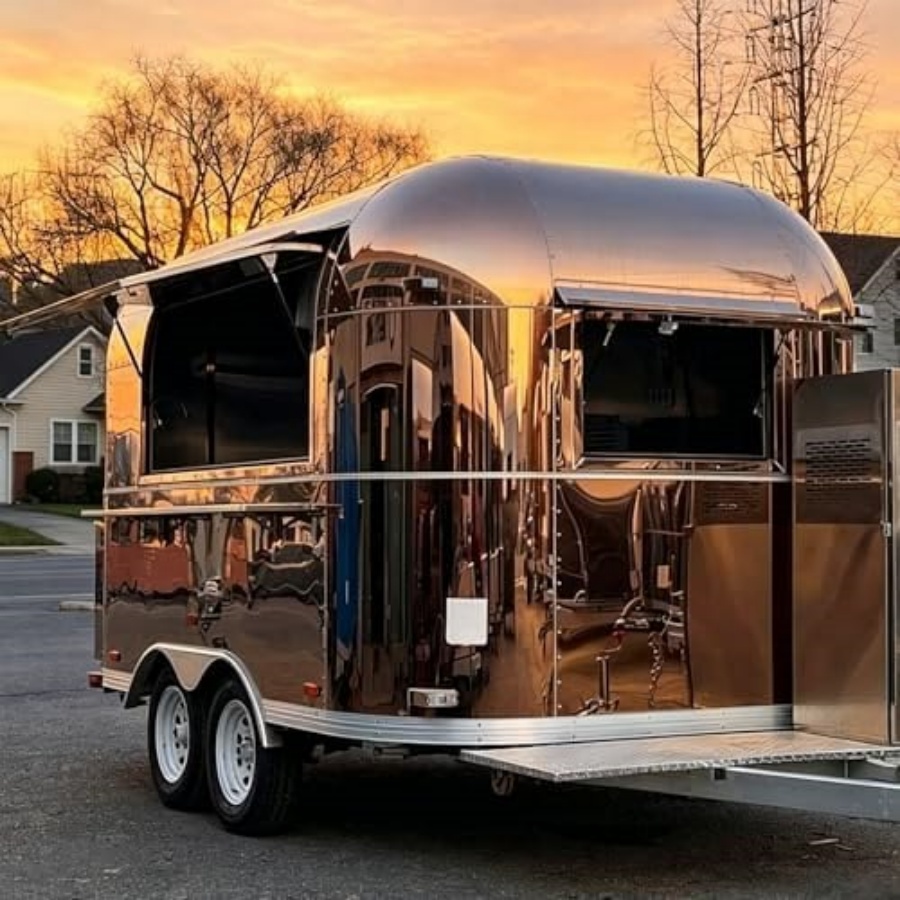
4. Built-In Safety Against Mechanical Downtime
A critical flaw of food trucks: if the engine, transmission or drivetrain fails, your entire kitchen is out of commission until repairs finish. Food trailers separate your revenue-generating kitchen from your towing vehicle. If your tow car breaks down, you can rent a temporary truck or use a spare family vehicle to move the trailer. Your food business never has to pause entirely for vehicle maintenance, saving you lost sales during peak event seasons.
5. Versatile Location Adaptability
From downtown weekend markets and office lunch lots to remote rural festivals, beach pop-ups and permanent food park spots, food trailers adapt to nearly every venue with basic towing access. Many event organizers actually prefer trailers over large food trucks for long-term vendor spots, as they occupy less moving space once parked and leave wider foot traffic aisles for guests.
While food trailers carry countless benefits, successful operators plan around these core factors to avoid costly mistakes:
1. Towing Vehicle Capacity
Always verify your tow vehicle’s maximum gross towing weight before ordering a custom trailer. Oversized fully fitted trailers with heavy cooking equipment require a powerful pickup or heavy-duty SUV. Budget for a tow vehicle upgrade if your current car lacks sufficient hauling power.
2. Streamlined, Fast-Service Menu Design
Your menu must prioritize quick cook times to avoid long customer queues. Trailers give you more cooking space, but slow-prep dishes will still create bottlenecks during peak hours. Focus on simplified, high-margin items that can be prepped ahead and finished in minutes.
3. Smart Staff Scheduling Matched to Foot Traffic
Extra interior space does not mean you can overstaff every shift. Match team size to expected customer volume for each location—understaffing creates long waits, while overstaffing eats into your daily profit margins.
Food trailers are the perfect business solution for:
l New entrepreneurs with limited startup capital
l Vendors focused on festivals, fairs, catering and semi-permanent food park spots
l Operators with complex menus requiring multiple cooking appliances and storage
l Business owners who want to avoid full shutdowns from vehicle mechanical failures
l Brands aiming for eye-catching, fully customizable mobile catering units with ample branding surface
If you want to launch a profitable mobile food venture without the massive costs and operational risks of food trucks or brick-and-mortar restaurants, a custom food trailer delivers the ideal balance of mobility, space and affordability to grow your food brand anywhere hungry crowds gather.
Mic Trailers has continually grown and evolved, becoming a leading manufacturer of trailers and trailer accessories.
With a focus on "Pursuit of Excellence, All for Customers,"
Leave a Message
Hey There! Subscribe To Our Newsletter!
No. 2 Zhicheng Road, Duanbolan Town, Qingdao City, Shandong Province, China
Copyright © 2025 Qingdao AMT Trailers Co., Ltd. All Rights Reserved.
 Powered by HiCheng


